Guides · 5 min read
Velocity-based training on gym machines: a beginner's guide to rep speed
Weight and reps tell you what you lifted. Speed tells you how it went. Velocity-based training, or VBT, just means reading your sets by how fast the weight moves.
What velocity-based training is
On every rep you push the weight up, then lower it. VBT measures how fast the lifting part goes, usually as an average speed for the rep. Strength coaches have done this for years with sensors clipped to barbells. The idea isn't new or fancy. It's a number for something you already feel: a rep that flies up versus a rep that grinds.
Why speed means anything
When you push as hard as you can, heavier weights move slower. That's the load-velocity relationship, and it's the whole basis of VBT [1]. So if you know the weight, its speed says something about how heavy it is for you today.
Most of that research is on barbell lifts like the squat and bench press. On machines there's less of it, but a small 2019 study filmed the weight plates on a leg extension and found the same pattern: heavier loads, slower plates. The fit was tight for each person, but poor when everyone was lumped together [4]. That's why your own numbers matter more than anyone else's. Each exercise has its own relationship too, so a speed from one machine doesn't carry over to another.
Slowdown: the most useful number in a set
Every hard set slows down as you tire. Coaches call it velocity loss. In one study on the squat and bench press, how much speed dropped across the sets lined up closely with blood lactate and lost jump height, two other signs of fatigue [2].
Some coaches use it to decide when to stop a set. In one 8-week squat study, stopping each set once speed had dropped 20% gave similar strength gains to going on to a 40% drop, with about 40% fewer reps. The 40% group grew a bit more muscle in parts of the thigh [3]. That was 22 young men on one exercise, so treat it as a reason to watch your slowdown, not a rule to follow.
| Slowdown can tell you | Slowdown can't tell you |
|---|---|
| Roughly how hard a set was getting | Exactly how many reps you had left |
| When the last reps are grinding compared with the first | Anything, if you slowed your tempo on purpose |
| Whether today's sets tired you more than last week's | Whether you're injured, sore or under-recovered |
Same weight, going up quicker
This is the one most people care about. Weight stacks jump in fixed steps, often 5 kg, so you can go weeks at the same pin. If that weight starts moving faster than it did last month, with the same setup and effort, that's a good sign you're getting stronger, often before you're ready for the next plate. It isn't proof on its own, so read it next to your reps and weights.
It only means something if you compare like with like:
- the same machine, set up the same way (seat, pads, handle);
- the same weight;
- the same rep in the set: rep 3 against rep 3, not rep 3 against rep 9;
- the same intent: lift with purpose, lower under control.
One quick set on a good day is just one set. Look at the trend over a few weeks, next to your weights and reps.
How to start on gym machines
- Pick two or three machines you use every week.
- Write down the setup so you can repeat it.
- On each rep, push the weight up with intent and lower it under control. Same range every time.
- Log the weight, the reps and the speed of each set.
- After a few weeks, look at two things: is the same weight moving quicker, and how much do your last reps slow down?
Don't chase speed by bouncing the stack, cutting the range short or yanking the cable. A faster rep only counts when it's the same rep, done the same way.
What NOMAE shows you
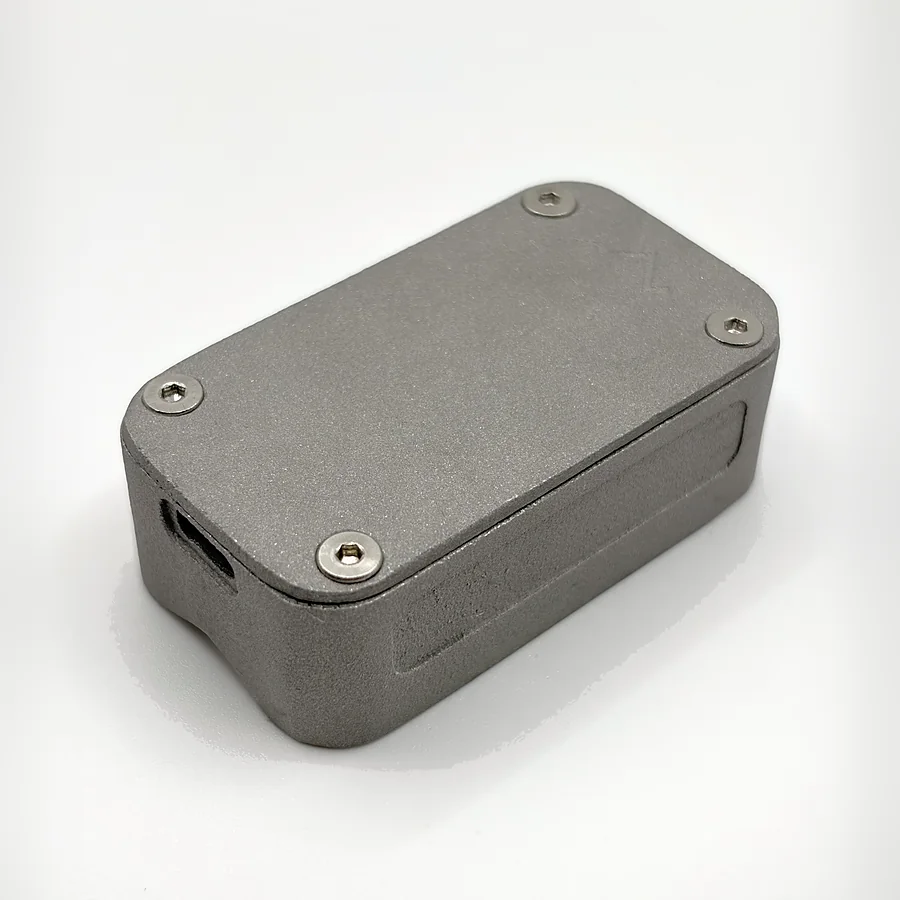
NOMAE is a magnetic tracker that sticks to the weight stack (here's how rep counters on gym machines work). Pick the machine in the app, check the weight, lift. After the set the free iPhone app shows your speed and how much you slowed down, and over the weeks it points out stuff like “Faster at 30 kg”. Counts your reps too.
What it doesn't do: predict your max from speed, tell you to stop mid-set, score your readiness, or know which exercise or weight you're on.
Sources
- Weakley J, Mann B, Banyard H, et al. Velocity-based training: from theory to application. Strength and Conditioning Journal. 2021;43(2):31-49. doi:10.1519/SSC.0000000000000560
- Sánchez-Medina L, González-Badillo JJ. Velocity loss as an indicator of neuromuscular fatigue during resistance training. Medicine & Science in Sports & Exercise. 2011;43(9):1725-1734. doi:10.1249/MSS.0b013e318213f880
- Pareja-Blanco F, Rodríguez-Rosell D, Sánchez-Medina L, et al. Effects of velocity loss during resistance training on athletic performance, strength gains and muscle adaptations. Scandinavian Journal of Medicine & Science in Sports. 2017;27(7):724-735. doi:10.1111/sms.12678
- Balsalobre-Fernández C, Cardiel-García M, Jiménez SL. Bilateral and unilateral load-velocity profiling in a machine-based, single-joint, lower body exercise. PLOS ONE. 2019;14(9):e0222632. doi:10.1371/journal.pone.0222632 (15 trained men, one machine: the authors call it a proof of concept.)
General information about training, not medical or personalised advice. If you have an injury or a health condition, check with a doctor or physiotherapist first.